







Made with Natural Ingredients, Creamy Texture, and Irresistible Flavor
Introduction
It may be time to reconsider your daily dietary choices—especially with the growing awareness of health and the increasing desire for more balanced and high-quality options. Amid the abundance of products and the ease of access to quick alternatives, Greek yogurt has emerged as one of the top healthy choices. However, not all products are created equal. When it comes to quality and natural ingredients, Greek yogurt stands out with its high protein content, low fat, and absence of preservatives. It offers a nutritious and satisfying meal that suits various lifestyles and times of day.
In the following lines, let us take you on a journey to explore what makes Greek yogurt so special and why it has become the preferred choice for those seeking rich flavor without compromising on nutritional value.
What is Greek Yogurt? And How Does it Differ from Regular Yogurt?
Greek yogurt is a type of yogurt that is strained to remove a significant portion of the whey, resulting in a thicker consistency and a higher protein content compared to regular yogurt. It is known for its dense texture and rich, creamy taste, making it one of the best choices for a complete breakfast or a nutritious snack throughout the day.
So, what are the main differences between regular yogurt and Greek yogurt? Here are the key distinctions:
-
- Greek yogurt contains more protein.
-
- It has fewer carbohydrates compared to regular yogurt.
-
- It undergoes additional straining, giving it a thicker consistency.
-
- It often contains more fat (unless it’s low-fat).
-
- It typically contains less sodium.
-
- Regular yogurt has a higher calcium content.
What are the Benefits of Greek Yogurt?
In recent years, Greek yogurt has become one of the most popular health-focused products worldwide. This popularity is attributed to its unique nutritional profile, combining a creamy, thick texture with numerous health benefits. Here are the top reasons why Greek yogurt is a smart and effective choice:
-
- High in Protein: Greek yogurt can provide up to 15g of protein per 180g serving—more than double that of regular yogurt. Protein is essential for muscle building, boosting metabolism, and promoting satiety.
-
- Low in Calories: Depending on the variety, it contains between 90 and 150 calories per serving, making it suitable for weight loss diets and light meals.
-
- Rich in Calcium and Minerals: It offers about 18% of the recommended daily intake of calcium, as well as magnesium and phosphorus, all vital for bone density and strength, especially with age.
-
- Digestive Health Support: Thanks to its probiotic content (beneficial bacteria), Greek yogurt supports digestion, regulates bowel movement, and reduces bloating or stomach discomfort.
-
- Appetite Control: Low in carbohydrates and high in protein, it helps increase satiety with fewer calories, supporting appetite control and weight management.
-
- Blood Sugar Regulation: The protein in Greek yogurt slows down carbohydrate absorption, reducing blood sugar spikes. Studies show that unsweetened Greek yogurt may improve insulin sensitivity, aiding in blood sugar management—especially beneficial for individuals with insulin resistance.
-
- Essential Nutrients: It provides vital nutrients such as vitamin B12 for nerve function and energy, potassium for blood pressure regulation, and zinc and selenium for immune support.
Types of Greek Yogurt
Though Greek yogurt may seem like a simple choice, some companies offer a wide variety of flavors to suit different preferences and dietary needs, including:
-
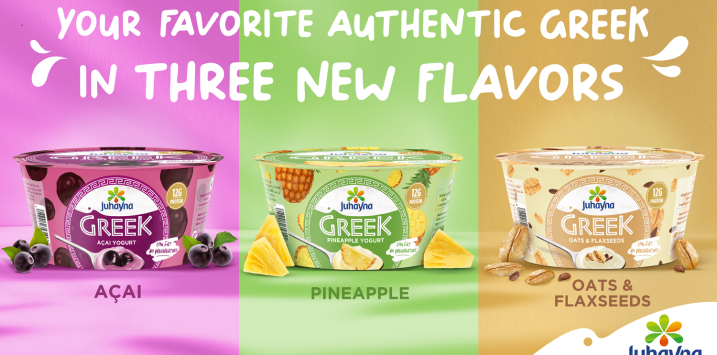
- Greek Yogurt with Oats and Flax Seeds: Perfect for those looking for a wholesome snack that nourishes the body and provides natural energy—carefully chosen ingredients offer satiety without unnecessary fats or additives.
-
- Greek Yogurt with Strawberry: Always a classic, this variety combines the natural taste of strawberries with nutritional benefits, using 100% real fruit for a balanced sweet flavor.
-
- Greek Yogurt with Mixed Berries: Featuring the flavors of blueberries, raspberries, and blackberries, this variety delivers a refreshing, fruity taste. With real fruit chunks and a creamy consistency, it’s both enjoyable and rich in antioxidants.
-
- Greek Yogurt with Vanilla: Offers a smooth vanilla taste and thick texture. It is low in fat and sugar but rich in protein—an ideal balanced snack.
-
- Greek Yogurt with Peach: A high-protein yogurt made with real peach flavor and luxurious creaminess—perfect as a light snack. For a more complete experience, add a mix of oats and nuts.
-
- Greek Yogurt with Oats: A balanced meal that combines natural oats with creamy yogurt, providing long-lasting energy and satiety without excess fat or artificial ingredients.
-
- Greek Yogurt Light: For those who prefer lighter options, the “Light” version delivers a great balance of flavor and nutrition—with low fat and high protein, ideal for a healthy lifestyle and a satisfying snack without unnecessary extras.
Greek Yogurt Price
Greek yogurt is available in 180g containers with multiple flavors to suit different tastes. As for pricing, it currently ranges from EGP 40 to EGP 45 per container, depending on the flavor, retailer, and ongoing promotions.
Please note that prices are subject to change over time.
Why is Greek Yogurt the Best Choice for You?
With a wide array of products and choices available to consumers, Greek yogurt stands out as a healthy alternative that combines nutritional value with delicious taste. It has become a favorite for many thanks to its numerous advantages:
-
- Made with 100% natural ingredients, free from artificial additives or preservatives.
-
- Available in a variety of flavors to cater to different tastes and dietary needs.
-
- High in protein—ideal for athletes or anyone seeking a satisfying, light meal.
-
- Thick consistency promotes a feeling of fullness.
-
- Rich in probiotics, supporting digestive health and boosting immunity naturally.
In Conclusion
Greek yogurt easily fits into your lifestyle with its natural taste and nutritional balance. It offers a light, healthy experience without complexity. Whether you enjoy it to start your day or as a midday snack, you’ll benefit from a delicious flavor that supports a balanced and comfortable lifestyle.
Frequently Asked Questions
How many calories are in Greek yogurt?
The calorie content varies depending on the flavor and fat content. Generally, a 180g serving of 2% low-fat Greek yogurt contains around 120 calories, while flavored varieties such as strawberry or vanilla may contain 145–160 calories. For precise information, refer to the nutritional label on the package.
What is the best type of Greek yogurt?
The best Greek yogurt depends on your dietary needs and lifestyle. If you are following a low-calorie diet, opt for a low-fat variety such as 2%. If you enjoy variety, explore the natural flavor options. For those prioritizing protein intake, look for versions with higher protein content. Always check the nutritional information to find the one that best suits your goals.
Is Greek yogurt good for weight loss?
Yes. Greek yogurt is suitable for weight management due to its high protein and low carbohydrate content, which helps increase satiety and reduce overall calorie intake.
How can I identify authentic Greek yogurt?
Authentic Greek yogurt has a thick, creamy texture and high protein content with reduced carbohydrates. It should be strained to remove whey and free of artificial flavors or preservatives. Look for labels indicating “Greek-style” or “strained” and review the nutritional label for confirmation.
Is Greek yogurt good for children?
Yes. Greek yogurt is a healthy choice for children, as it provides protein and calcium essential for growth and bone strength.
Is Greek yogurt suitable for those with lactose intolerance?
Yes. Greek yogurt is often better tolerated by individuals with lactose intolerance because the straining process reduces its lactose content. Additionally, the probiotics in some types aid in digesting the remaining lactose.